
Sattva · clarity
Sāttvika-jñāna
avibhaktaṁ vibhakteṣu
Sees one imperishable reality undivided in all diverse beings. Unity within diversity. The first wordless cognition: 'there is something' — pure existence (sat).
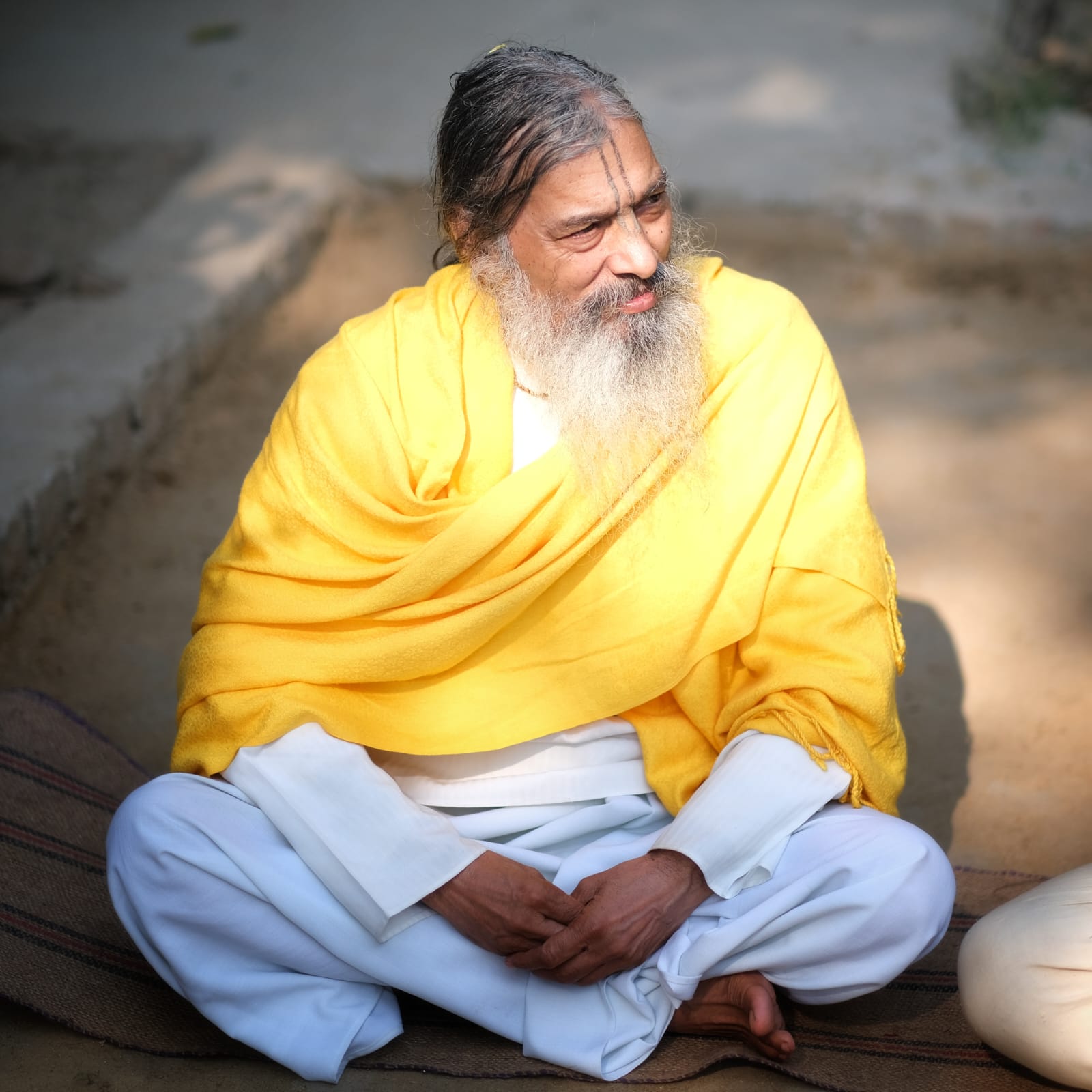
A teaching by
Śrī Satyanārāyaṇa Dāsa Bābājī
Śrī Kṛṣṇa classifies knowledge by the three guṇas of prakṛti — sattva, rajas, and tamas — and points beyond them to nirguṇa-jñāna fixed in Bhagavān.

Sāttvika
Clarity
Rājasika
Activity
Tāmasika
Inertia
The framework
Each guṇa shapes a distinct way of knowing. Together, they describe almost the entire range of human cognition. A fourth — nirguṇa-jñāna — points to what lies beyond all three.
avibhaktaṁ vibhakteṣu
Sees one imperishable reality undivided in all diverse beings. Unity within diversity. The first wordless cognition: 'there is something' — pure existence (sat).
nānā-bhāvān pṛthag-vidhān
Perceives multiplicity and difference. Buddhi organises perception with memory: 'this is a pot, that is a tree.' Practical, vyāvahārika knowledge.
atattvārtha-vat alpaṁ ca
Confined to a single effect such as the body. Irrational, trivial, devoid of truth. Ignorance dressed as understanding.
man-niṣṭhaṁ nirguṇaṁ smṛtam
Knowledge fixed in Bhagavān. Transcends sattva, rajas, and tamas. Brings complete realisation. (Bhāgavatam 11.25.24.)
Source verses
"That knowledge by which one sees a single, imperishable reality in all diverse objects — undivided in the divided — know that to be sāttvika."
The defining mark of sāttvika cognition: unity beneath apparent multiplicity.
"That knowledge by which one perceives multiplicity and distinctness among beings — know that to be rājasika."
Useful for daily life and science, but cannot by itself reveal the underlying ground.
"That knowledge which is confined to a single effect (such as the body), irrational, trivial, and devoid of truth — know that to be tāmasika."
Identification with the body-as-self is the prototypical tāmasika cognition.
"Knowledge of oneness is sāttvika; knowledge based on dualistic alternatives is rājasika; knowledge of mere material phenomena is tāmasika; but knowledge fixed in Me is beyond the guṇas."
Introduces the fourth category — nirguṇa-jñāna — fixed in Bhagavān.
"Knowledge arises from sattva; from rajas arises greed; from tamas arise negligence, delusion, and ignorance."
The verse that creates the apparent contradiction — resolved in the next section.
"Doubt, error, valid cognition, memory, and sleep are the five characteristics of buddhi understood by its functions."
Echoed in Yoga Sūtra 1.6: pramāṇa-viparyaya-vikalpa-nidrā-smṛtayaḥ. These vṛttis arise from buddhi mixed with the three guṇas.
Resolving the contradiction
If knowledge arises only from sattva (Gītā 14.17), how can rājasika and tāmasika knowledge exist? The contradiction dissolves once we trace the stages of perception:
Indriya meets viṣaya
A sense organ contacts an object. The first awareness is wordless: 'there is something.'
Nirvikalpaka — pure existence
Sattva is the ground of cognition. It reveals undivided being shared by all objects. This is sāttvika-jñāna.
Savikalpaka — 'this is a pot'
Memory + buddhi structure perception into named, classified objects. Useful, practical — rājasika.
Nirguṇa transcends
Awareness fixed in Bhagavān is nirguṇa-jñāna — knowledge beyond the three guṇas.
Key insight: the word sattva is built on sat (existence) plus the suffix tva. Sattva is what reveals existence itself. So sattvāt sañjāyate jñānam describes the very ground of cognition — every act of knowing begins as a sāttvika revelation of being. Rajas then diversifies; tamas obscures.
Activity
Step 1 · Statements to place (8 left)
Step 2 · Your placements
Sāttvika
No statements yet.
Rājasika
No statements yet.
Tāmasika
No statements yet.
Nirguṇa
No statements yet.
Practice
Apply the framework to your own day. Saved locally on your device.
Continue the journey
Sattva, rajas, and tamas aren't just ideas to know — they're the architecture of your mind. Two ways to keep going: an ecourse taught by Bābājī himself, and a live weekly study group with Dr. Joshi, trained in this lineage by Bābājī for over a decade.
◆ Self-paced · On-demand
$59 · 2 yrsRajas & tamas — the original troublemakers
Explore the nature of the mind and the disturbances that arise from rajas (passion) and tamas (passivity), which create desires (rāga) and aversions (dveṣa) that contribute to mental and physical imbalances. While the mind is inherently sāttvic, the presence of rajas and tamas disrupts its clarity, leading to emotional and behavioral challenges. Understand rajas and tamas — the original troublemakers.
◆ Weekly · Live on Zoom
$149 / moAwakening through awareness
Every Saturday morning, a small live circle gathers on Zoom with Dr. Joshi — trained directly by Bābājī for 11+ years. One Vedic concept per week — sattva, rajas, tamas, ahaṅkāra, samskāras — brought to life with group exercises, real case studies, and honest discussion. Not theory. Tools you can use on a Tuesday morning.